Principles of refined watch wearing
A fine watch does not announce itself. It is recognised.
Beyond its function, a timepiece reflects judgement—an understanding of proportion, context, and restraint. Worn well, it integrates seamlessly into the whole. Worn poorly, even the most exceptional piece feels misplaced.
Etiquette in horology is not governed by rigid rules, but by awareness. It is the difference between ownership and discernment.
Select with intent
A watch should belong to its setting. The more formal the context, the greater the need for restraint.
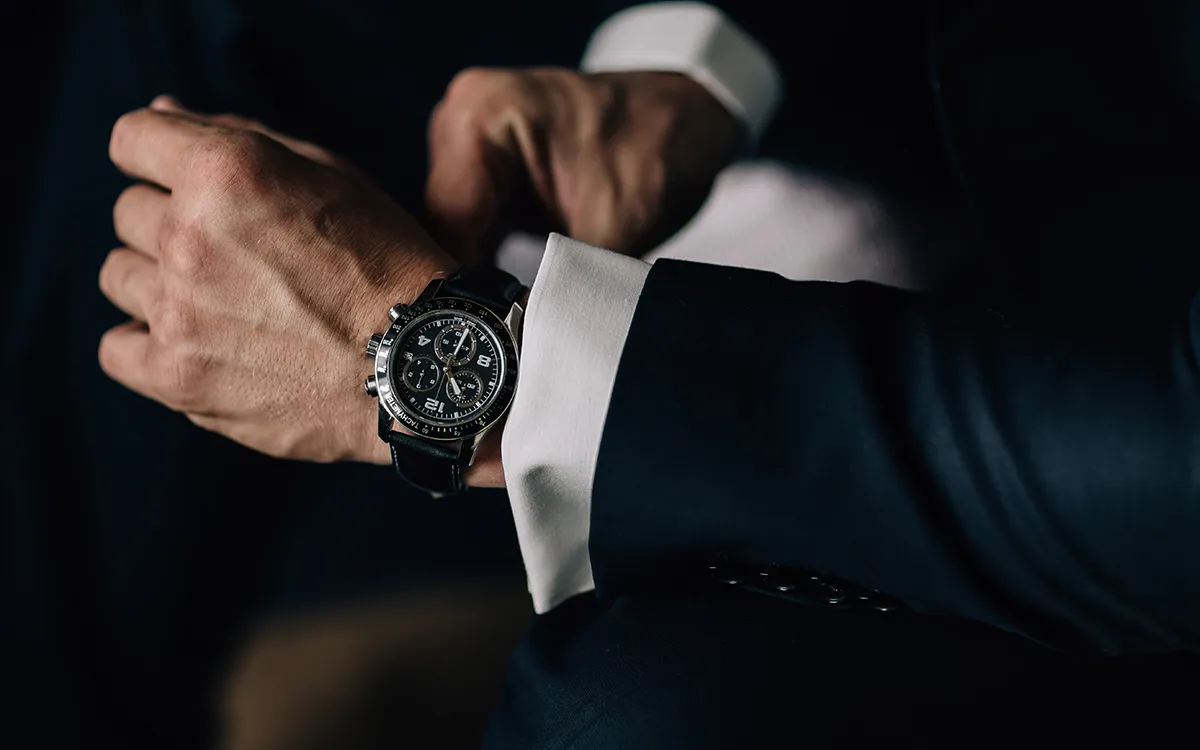
In formal dress, simplicity leads. Slim cases, restrained dials, and precious metals sit naturally beneath a cuff. Pieces such as the Jaeger-LeCoultre Master Ultra Thin or the Patek Philippe Calatrava exemplify this approach. Their proportions are deliberate, their presence quiet.
A dress watch should complement tailoring, not compete with it. High-polish finishes, minimal complications, and leather straps remain the standard. Thickness matters here. A watch that disrupts the line of a shirt cuff undermines the refinement of the entire outfit.
Professional environments allow more latitude. Integrated bracelet designs, such as the Audemars Piguet Royal Oak, bridge formality and modernity. They carry visual weight but remain appropriate when paired with structured tailoring or elevated casual wear.
The key is balance. Texture, finishing, and proportion should align with the rest of the outfit. The watch can express personality, though never at the expense of coherence.
In relaxed environments, utility becomes part of the aesthetic. Tool watches such as the Rolex Explorer or technical pieces like the Richard Mille RM 11-03 are designed for performance and legibility.
Context still matters. A highly technical watch in a formal setting introduces visual noise. Conversely, a delicate dress watch worn during physical activity suggests a mismatch between object and purpose.

Precision of fit
A well-chosen watch must also sit with precision. Fit determines whether it integrates or distracts.
The case should remain within the natural width of the wrist. Lugs that extend beyond the wrist edge create imbalance, while overly small cases can appear inconsequential. Fit should feel tailored, not approximate.
Slim profiles are essential in formal wear. A watch should slide beneath a cuff without resistance. Excess thickness interrupts the silhouette and draws unnecessary attention.
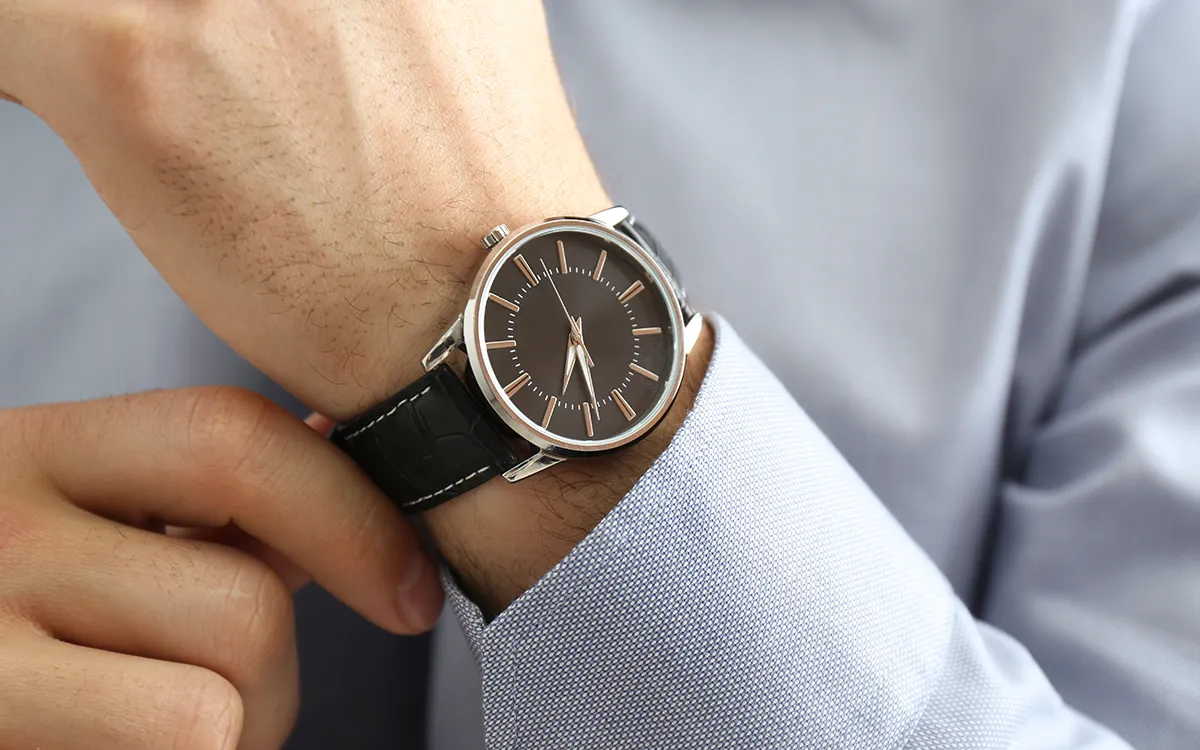
A watch should rest just above the wrist bone. This position provides stability, comfort, and visual alignment. Straps should be secure without constriction. A loose watch signals carelessness, while excessive tightness appears forced.
Metal and material protocol
A watch does not exist on its own. Its materials must relate to the wider palette of what you wear. Consistency in metals and textures creates cohesion, while inconsistency introduces subtle but noticeable discord.
Metals should align across accessories. A steel watch pairs naturally with a steel belt buckle or cufflinks. Gold should echo gold. This alignment creates quiet harmony rather than fragmented detail.
Straps influence both tone and function. Alligator or calf leather communicates formality. Rubber and textile straps introduce a more relaxed, practical character.
Changing straps is not merely aesthetic. It allows a single watch to transition across settings when done with restraint and awareness.
The social grace of horology
Refinement is revealed in behaviour. A watch may signal taste, but the way it is handled communicates composure, awareness, and respect for those around you.
Checking the time should be subtle. A brief glance is sufficient. A pronounced wrist movement, particularly in conversation, signals distraction. Repetition amplifies the impression.

A considered compliment acknowledges taste and craftsmanship. Focus on design, finishing, or heritage. Avoid questions about price or acquisition. These shift the conversation from appreciation to transaction.
A watch should never feel like a statement seeking attention. The most compelling presence comes from restraint. The watch supports the individual, not the other way around.
Ownership and care
To own well is to preserve. Scratches, worn straps, or poorly adjusted bracelets diminish even the finest pieces, interrupting the integrity they are meant to uphold.
Regular servicing preserves performance, while considered storage protects materials from gradual decline. Attention to detail ensures the watch continues to reflect the standards it represents. Discreet forms of protection, applied with restraint, can further guard against the marks of daily wear without altering the character of the piece.
A final note on refinement
Watch etiquette is, at its core, an expression of respect towards craftsmanship, towards context, and towards the people you engage with. The right watch, worn with consideration, becomes part of a larger language of quiet confidence.
For those who value preservation as much as presentation, protection also plays a role. Subtle solutions such as RX-8 luxury watch protection stickers help guard against everyday wear without altering the character of the piece. Discreet and considered, they embody the same principle that defines refinement: care without excess.
Refinement is rarely about more. It is about recognising what matters, and ensuring it endures.