The hidden cost of over-polishing a luxury watch
The first scratch hurts. When your luxury watch gets its very first noticeable scratch, it can be difficult to accept. What you do next matters.
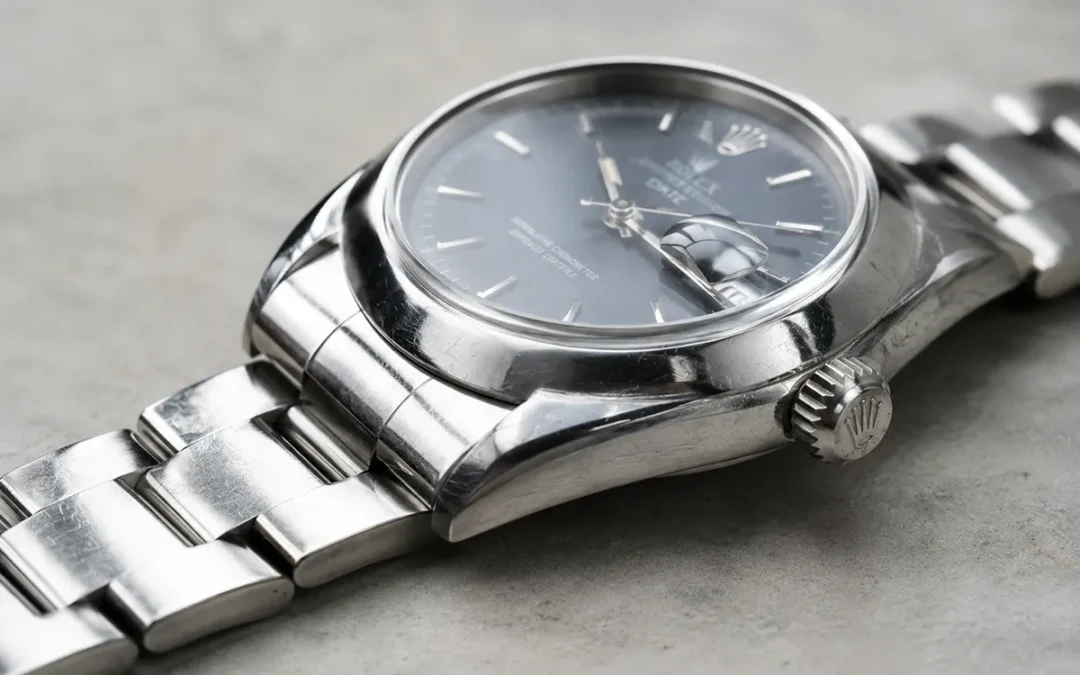
Whether it appears across the clasp of a Rolex Submariner, on the bezel of an Audemars Piguet Royal Oak, or along the case flank of a treasured Patek Philippe, the instinct is often the same: remove it as quickly as possible. Many owners assume that restoring a watch to a flawless, mirror-like finish is the best way to maintain its beauty and value.
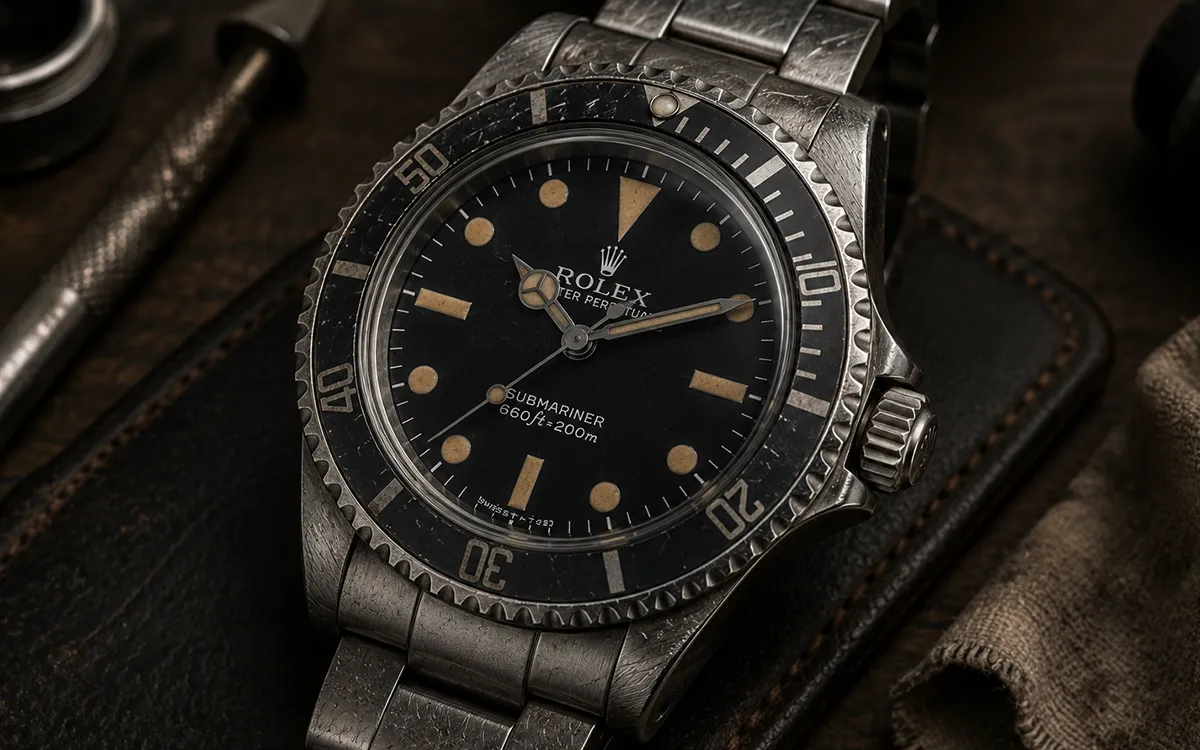
Before you reach for the polish, keep in mind that in the eyes of luxury watch collectors, originality is one of the most sought-after qualities. Collectors, dealers, and enthusiasts frequently place greater value on a watch that shows honest signs of wear than one that has been repeatedly polished to hide every mark.
Every polishing session removes metal. Over time, those tiny reductions add up, altering the proportions, sharpness, and character that originally made the watch desirable.
Understanding why this happens can help owners make more informed decisions about preserving both the appearance and long-term value of their timepiece.
What polishing actually does to a watch
Many people imagine polishing as a process that simply buffs away scratches.
In reality, polishing works by removing the metal surrounding the scratch until the surface becomes level again. The scratch itself is not truly erased. Instead, the surrounding material is reduced to match its depth.
A single light polish may remove only a microscopic amount of metal. However, repeated polishing over many years gradually reshapes the watch’s case.
Luxury watches are designed with precise geometry. The angles, edges, bevels, brushed surfaces, and polished facets are carefully engineered and finished at the factory. Those details contribute significantly to the watch’s visual identity.
As metal is removed, these defining features begin to soften.
Sharp transitions become rounded. Crisp edges lose their definition. Distinctive case lines become less pronounced.
The watch may appear shiny, yet it no longer looks exactly as its designers intended.
The design details collectors care about
To appreciate why over-polishing is such a problem, it helps to understand what collectors are looking for.
Luxury watches are not simply instruments that tell time. They are examples of industrial art and precision craftsmanship.
Consider the architectural lines of a Royal Oak. Its appeal relies heavily on the interplay between sharp bevels, flat surfaces, and contrasting finishes. A heavily polished example can lose much of this visual impact.
Vintage Rolex models provide another classic example. Original cases often feature strong, symmetrical lugs with crisp chamfers and defined edges. Excessive polishing can make those lugs appear thinner, uneven, and rounded.
These changes may seem subtle to a casual observer. To experienced collectors, they are immediately noticeable.
The difference between a well-preserved original case and an over-polished one can significantly influence desirability.
Why “unpolished” commands a premium
A word that frequently appears in high-end watch listings is “unpolished”.
For many collectors, it is one of the most attractive descriptions a seller can provide.
An unpolished watch represents authenticity. It suggests that the case retains its original dimensions, lines, and factory finishing. It tells buyers that what they are seeing today closely resembles what was left by the manufacturer years or even decades ago.
In some segments of the market, particularly for sought-after vintage pieces, original, unpolished examples can command substantial premiums over comparable watches that have undergone multiple refinishing treatments.
The reason is simple.
Originality cannot be recreated once it has been removed.
A skilled watchmaker may improve the appearance of a worn case, but replacing lost metal and restoring every original factory detail is far more difficult and often impossible to achieve perfectly.
The signs of an over-polished watch
The effects of over-polishing become more apparent with each refinishing cycle.
Common indicators include:
Sharp transitions between brushed and polished surfaces become blurred, reducing visual definition.
Repeated material removal can alter the proportions of the watch case, making lugs appear noticeably slimmer than their original shape.
One side of the case may appear slightly different from the other, particularly if previous polishing was performed inconsistently.
Case-back markings, reference numbers, hallmarks, and other engravings can become faint over time.
The watch may look cleaner, yet lose much of the presence and visual sharpness that originally distinguished it.
The cumulative effect is often described by collectors as a watch looking “melted” rather than crisp.
When polishing creates bigger problems
The consequences of excessive polishing are not always limited to appearance.
Material removal can occasionally affect the fit and interaction of various components. Sharp tolerances between the case, bezel, bracelet, and other elements may be altered.
In extreme cases, compromised geometry may impact water resistance or require replacement parts to restore proper functionality.
Once original components are replaced, another layer of originality can be lost.
For collectors who place a premium on authenticity, these changes may further reduce desirability.
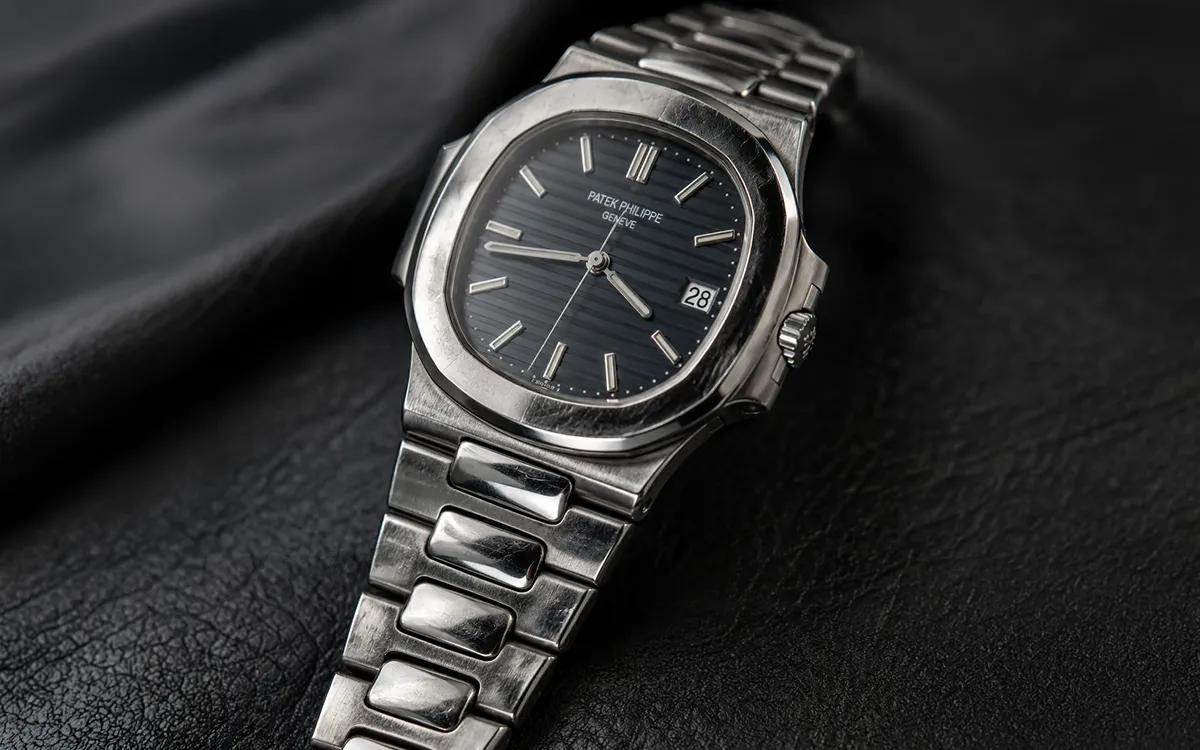
The beauty of honest wear
Not every scratch is a flaw.
Within collecting circles, there is growing appreciation for the concept often associated with the Japanese philosophy of wabi-sabi—finding beauty in imperfection and the passage of time.
A luxury watch is designed to be worn.
The fine marks on a clasp from years at a desk. The light scratches accumulated during travel. The subtle patina that develops across certain materials. These signs often tell a story that cannot be replicated.
Many enthusiasts see them as evidence of a life well lived rather than damage that must immediately be erased.
This perspective does not mean neglecting a watch. It simply recognises that character and originality often matter more than cosmetic perfection.
How to protect your watch’s value without chasing perfection
Preserving a luxury watch does not require hiding it in a safe or avoiding daily wear.
It simply requires a thoughtful approach to maintenance.
Reserve polishing for genuine need
Not every service requires refinishing. Many watches can undergo routine maintenance without any cosmetic intervention.
Choose experienced specialists
When refinishing becomes necessary, select professionals with specific expertise in luxury watch restoration. Different brands require different finishing techniques and levels of precision.
Consider modern restoration methods
Advanced techniques such as laser welding allow specialists to add matching material into deeper scratches or damaged areas before refinishing.
Rather than removing large amounts of surrounding metal, the affected area can often be restored more conservatively.
Use protective solutions
Preventing damage is usually preferable to correcting it later.
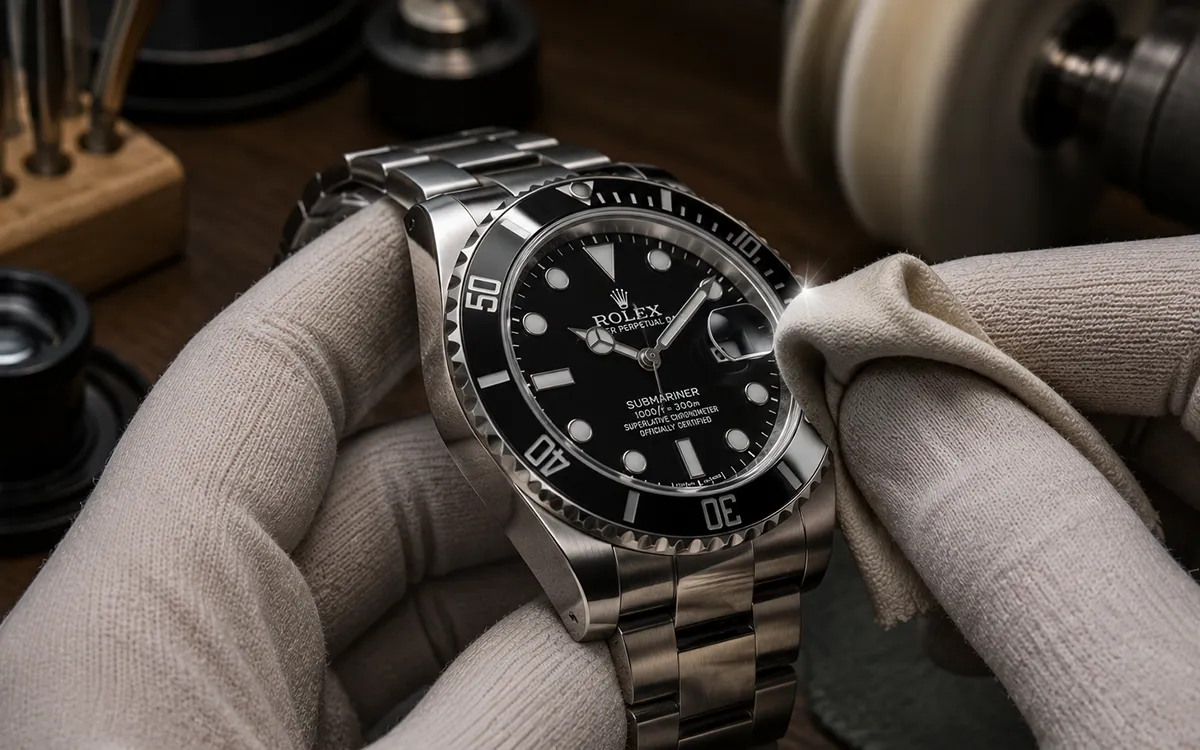
Modern watch protection films offer a discreet layer of defence against everyday scratches and scuffs. High-risk areas such as bezels, clasps, and polished case surfaces can remain protected while preserving the original metal beneath.
Think long-term
A luxury watch is often owned for decades, not years. Decisions that seem insignificant today can have a noticeable impact on value and originality over time.
Originality is worth protecting
A luxury watch is far more than polished steel, gold, or platinum.
It is a carefully crafted object defined by precise lines, proportions, and finishing details that reflect the skill of its makers. Every unnecessary polishing session removes a small part of that original artistry.
The goal should not be to eliminate every sign of wear. The goal should be to preserve the watch’s character, integrity, and long-term value.
A few honest scratches rarely diminish a great watch. Repeatedly removing metal often does.
For owners who want to enjoy their watches while preserving their original condition, prevention is often the smartest strategy. RX-8 luxury watch protection films provide an almost invisible barrier against daily wear, helping protect vulnerable surfaces from scratches without altering the watch’s appearance or factory finishing. Rather than constantly correcting damage after it occurs, owners can focus on wearing and enjoying their timepieces with greater confidence.
The most valuable watches are rarely the ones that look artificially perfect. They are the ones that remain closest to their original form, carrying both their craftsmanship and their story forward for the next generation.